Film Review: ‘A Body to Live In,’ Angelo Madsen’s new feature documentary

Before piercing became a sterile, clinical business, Fakir Musafar celebrated it as a spiritual experience associated with sex, bondage, pain, pleasure, sickness and healing.
In 2026, it isn't uncommon to see bodies adorned with piercings and tattoos on people we interact with every day. Blue collar, white collar, business owners, food servers, lawyers, even cops can be found with some form of “body modification,” as many call it.
Recently, in front of a global Winter Olympics audience, figure skater Alyssa Liu sported a self-administered frenulum piercing; it dangled in front of her ever-present smile as she performed her gold-medal winning program.
While tattooing and piercing practices date back millennia, in modern Western culture they still evoke rebelliousness or niche counterculture despite their relative ubiquity.
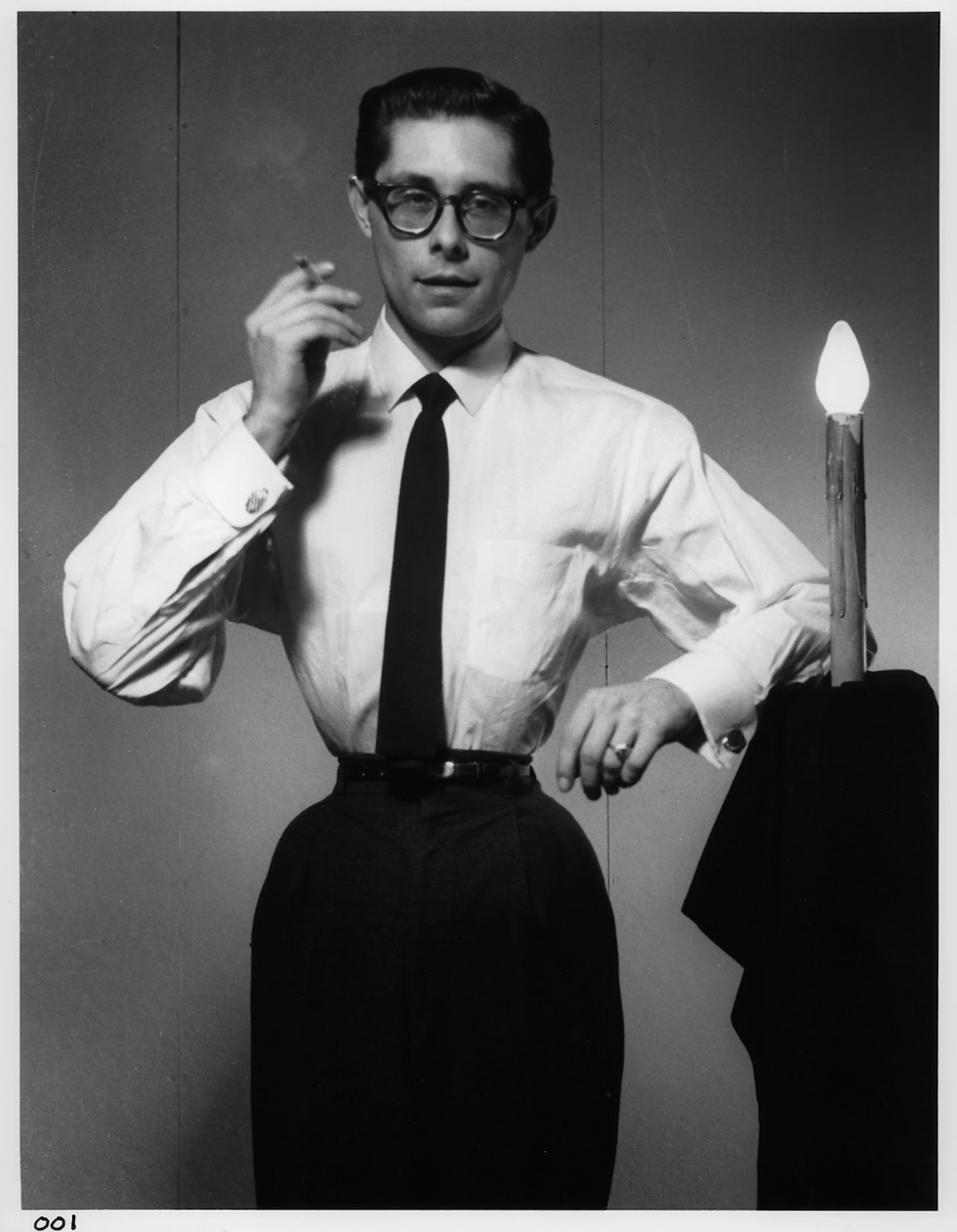
Angelo Madsen’s new documentary feature, “A Body to Live In,” intimately examines the life of artist Fakir Musafar and his influence on modern BDSM (bondage, discipline/domination, sadism and masochism) and body-modification culture.
The first images on screen are two photos of a young Roland Loomis, later known as Musafar, in 1944 at age 14. His waist is cinched tightly with a belt, creating a drastic hourglass figure, and his neck is completely wrapped in rope, from collarbone to chin.
In one image, he looks directly into the lens at the viewer with a calm and intentional gaze. While the nature of his body modification and play became only more extreme later, those early images are startling because they clash so strongly with the popular imagination of a young boy in 1940s South Dakota.
Fortunately for the film, young Loomis continued to photograph himself and others for decades after these early self-portraits, all the while documenting his body experiments and performances. This trove of images serves as a visual backbone of the film.

Madsen departs from the familiar “talking heads” style of documentary interviews. The dozen or so cast members are introduced through contemporary 16mm portraits, but we are left with only their voices over a mixture of photos, archival footage, written poetry and composed scenes or “still lives” created by the filmmaker.
Most of the narration comes from Musafar himself in a recorded interview from his deathbed in 2018. Combined with the voices of his closest friends and collaborators, the montage of video and images are given emotional context. Without the participants’ willing collaboration, the film’s images might seem cruel, voyeuristic or obscene, but the voices cultivate understanding in a meaningful way.
Madsen achieves a thoughtful balance between experimental filmmaking and linear storytelling. The film, subtitled "Flesh as Philosophy," follows Musafar from his early days of photography in the 1940s, through the countercultural renaissance of the ‘60s and ‘70s, and into the terrifying era of HIV and AIDS in the ‘80s and ‘90s. The film has a clear narrative thread that allows it to be exhaustive without being overwhelming, comprehensive without being didactic.

When discussing Musafar and modern Western culture in terms of body modification, cultural appropriation is an unavoidable subject. The film doesn’t shy away from the subject, but confronts it head on. Musafar himself acknowledges the influences of various Indigenous cultures, rituals and traditions on his work. But as his profile rose in the early 1980s, so did critiques of his ritual practices by Indigenous people whose cultures are often misinterpreted by the majority. The film engages with this cultural rift without taking sides.
Instead, it focuses on the growing pains of a social movement many refer to as “Modern Primitives.” Musafar and his contemporaries found common ground in the body play and ritualistic practices they performed, but each individual found themselves participating for different reasons. For some, BDSM was about consent and autonomy. Others sought out ways to fill a hole left after escaping rigid Western religious traditions. For others still, it was part of a larger pursuit of knowledge, expression and understanding.

Looking back from this side of the new millennium, it is fascinating to see the origins of today’s piercing and tattoo industries. Before piercing became a sterile, clinical business, Fakir Musafar celebrated it as a spiritual experience associated with sex, bondage, pain, pleasure, sickness and healing.
As with most things, the more people know about something, the more they seek to define it. “A Body to Live In” refuses to define itself and refuses to define its subjects. It allows its subjects to express themselves authentically and without fear.
Curiosity may bring you to this film, but instead of peering into the unknown, you are invited inside to truly understand the impact of Musafar’s and others’ work on the world of body modification, and on society as a whole. It is a beautiful reminder that countercultures do not exist in a vacuum but are instead a continuing conversation among individuals reacting to the world in which they live.
Feature documentary “A Body to Live In” (2025) runs 98 minutes, in color. For local and national show times and locations, including Q&A’s with director Angelo Madsen and cast members, visit AlteredInnocence.net. For more information on the film, visit ABodyToLiveIn.com.


Comments